If you run a local business and someone searches for “restaurant near me,” “hotel Poros,” “graphic designer Piraeus,” or “café Aegina,” it is perfectly reasonable to want your business to appear high on Google Maps and in Google's local results.
That does not happen simply because you created a Google Business Profile.
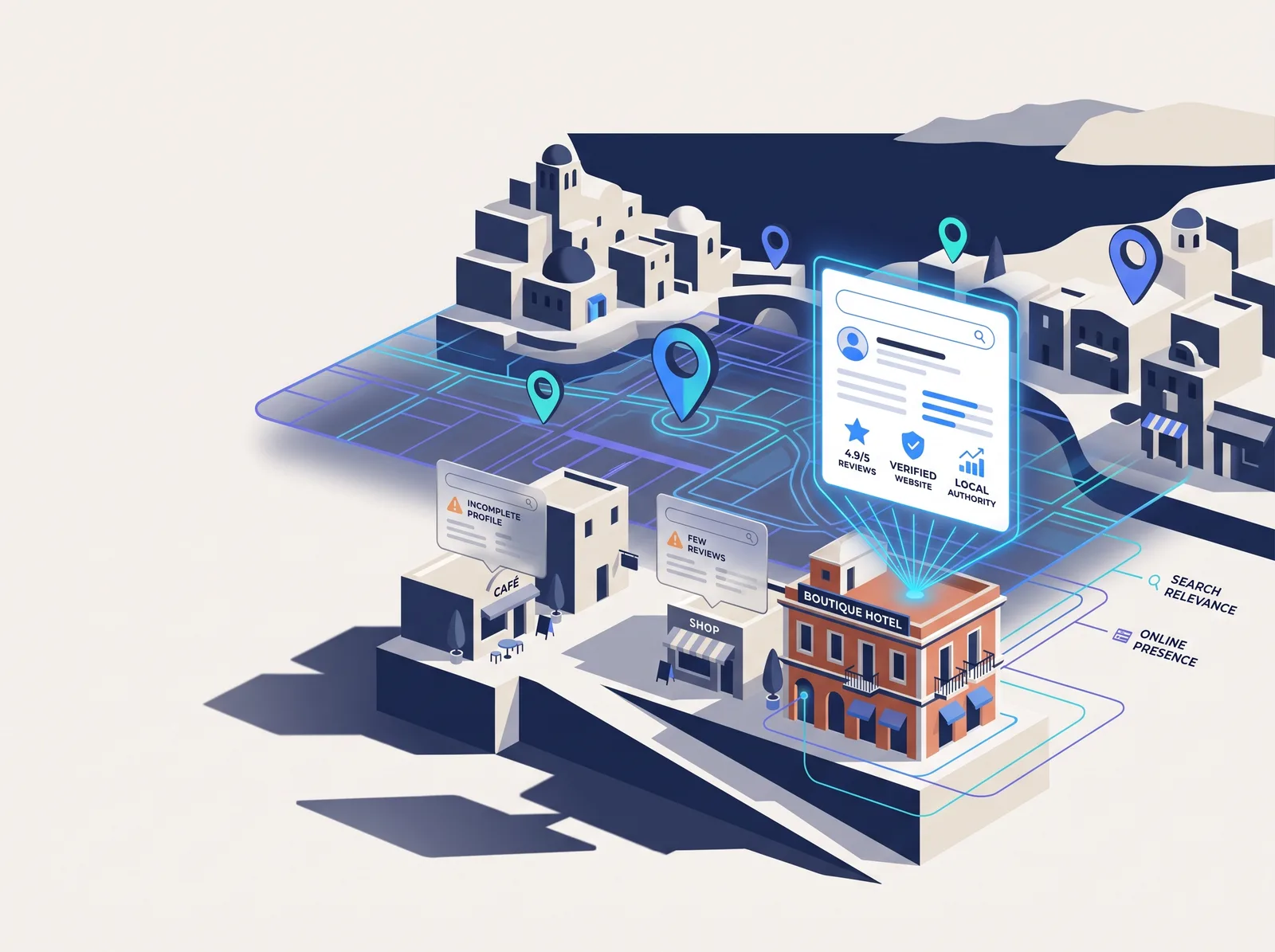
Google explains that local results are based mainly on three factors:
- Relevance: how well your business matches what the user is searching for.
- Distance: how close your business is to the location or area used in the search.
- Prominence: how well known and trustworthy the business appears based on information from the web, links, reviews, and other signals.
It is important to understand one thing from the beginning:
There is no button, package, or “hack” that buys a better position on Google Maps.
Google itself states that there is no way to request or pay for a better local ranking.
What you can do is give Google more reasons to understand accurately who you are, what you offer, where you operate, and why your business is relevant and trustworthy for a specific search.
The Short Answer
If your business is not appearing well on Google Maps, check these points first:
- has the Google Business Profile been verified correctly?
- are the name, category, address, phone number, website, and opening hours accurate and complete?
- is the primary category as specific as possible?
- does the website clearly explain your services and location?
- do you have genuine, recent reviews?
- do you respond to reviews?
- are the photos suitable and the information up to date?
- is the business mentioned consistently on other trustworthy websites and directories?
- can Google crawl and understand your website?
- do you have local pages and content that answer real customer questions?
If several of these elements are missing, the solution is not to change two words in the profile description.
You need a local visibility system, not just a listing.
What Exactly Is Local SEO?
Local SEO is the process of optimizing a business's digital presence so that it appears more often and more accurately in searches with local intent.
Examples include:
- “restaurant Poros”
- “web designer Greece”
- “hotel near Askeli beach”
- “café Aegina”
- “dentist near me”
- “best brunch Poros”
- “social media agency Piraeus”
Local SEO is not only about Google Maps.
It includes:
- Google Business Profile,
- the website,
- technical SEO,
- reviews,
- local content,
- mentions and links from other websites,
- consistent business information,
- local service pages,
- structured data,
- Search Console,
- real reputation and recognition.
The Google Business Profile is an important part of the system. It is not the whole system.
The 3 Main Factors That Affect Google Maps Rankings

1. Relevance: Does Google Understand Exactly What You Do?
Relevance is how well your business matches the user's search.
If someone searches for “seafood restaurant Poros” and your business is listed only under the broad category “Restaurant,” with minimal information, no menu, no accurate services, and a website that does not clearly explain what it offers, Google has less context.
That does not mean you should fill the profile with keywords.
It means you should describe it accurately.
The Primary Category Really Matters
Google states that categories help customers find specific services and that category selection affects local ranking.
The primary category should describe what the business is, not everything it “has.”
Adding more categories does not automatically improve rankings.
Google recommends using as few categories as possible and choosing the most specific ones needed to describe the business's core type accurately.
2. Distance: A Factor You Cannot “Optimize”
Distance is perhaps the most misunderstood factor.
If someone is in the center of Poros and searches for “coffee near me,” Google will consider how close each relevant business is.
If the user does not specify a location, Google uses what it knows about that person's position.
This means an excellent business may appear lower for a user who is farther away and higher for another user who is nearby.
There is no technical trick that can digitally move your physical location.
Local SEO does not mean you will rank first for every user, from every location, for every search.
Anyone promising “#1 on Maps for everyone” is ignoring how local search works.
3. Prominence: How Strong Does the Business Look Overall?
Google describes prominence as how well known a business is.
This is not limited to the Google Business Profile.
Google says prominence may be based on information such as:
- links to the business,
- articles,
- directories,
- the number of reviews,
- review score,
- the website's organic presence.
In other words, if the rest of the internet barely knows that you exist, a perfectly completed Business Profile has limited support.
This is why Local SEO connects directly with broader SEO and brand authority.
The Google Business Profile Should Be Complete, Not “Stuffed”
Google says that businesses with complete and accurate information are more likely to appear in relevant local searches.
The essential information includes:
- the real business name,
- the correct address or service area,
- phone number,
- website,
- primary and secondary categories,
- opening hours,
- special hours,
- attributes,
- services,
- photos and video,
- business description.
The mistake is treating all of these as fields for keyword stuffing.
The business name must be the real name of the business.
You should not turn:
Retro Coffee & Brunch
into:
Retro Coffee & Brunch Poros Best Breakfast Brunch Cocktails
because you want to appear for more keywords.
Google requires the name to reflect the real name the business uses in the physical world, on its website, and in its branding.
Adding excessive keywords can cause problems instead of helping.
Reviews Help, but Not in the Way Many People Think
Reviews are important for two different reasons:
- they help a potential customer decide,
- they form part of the prominence signals Google uses for local ranking.
Google says that more reviews and positive ratings can help local rankings.
That does not mean you should chase artificial five-star reviews.
The right strategy is:
- ask genuine customers for a review,
- make the process easy with a direct review link or QR code,
- respond to positive and negative reviews,
- do not offer rewards in exchange for a review,
- do not buy reviews.
Google explicitly prohibits offering incentives, such as discounts or free products, in exchange for reviews.
Review Management Is Also Marketing
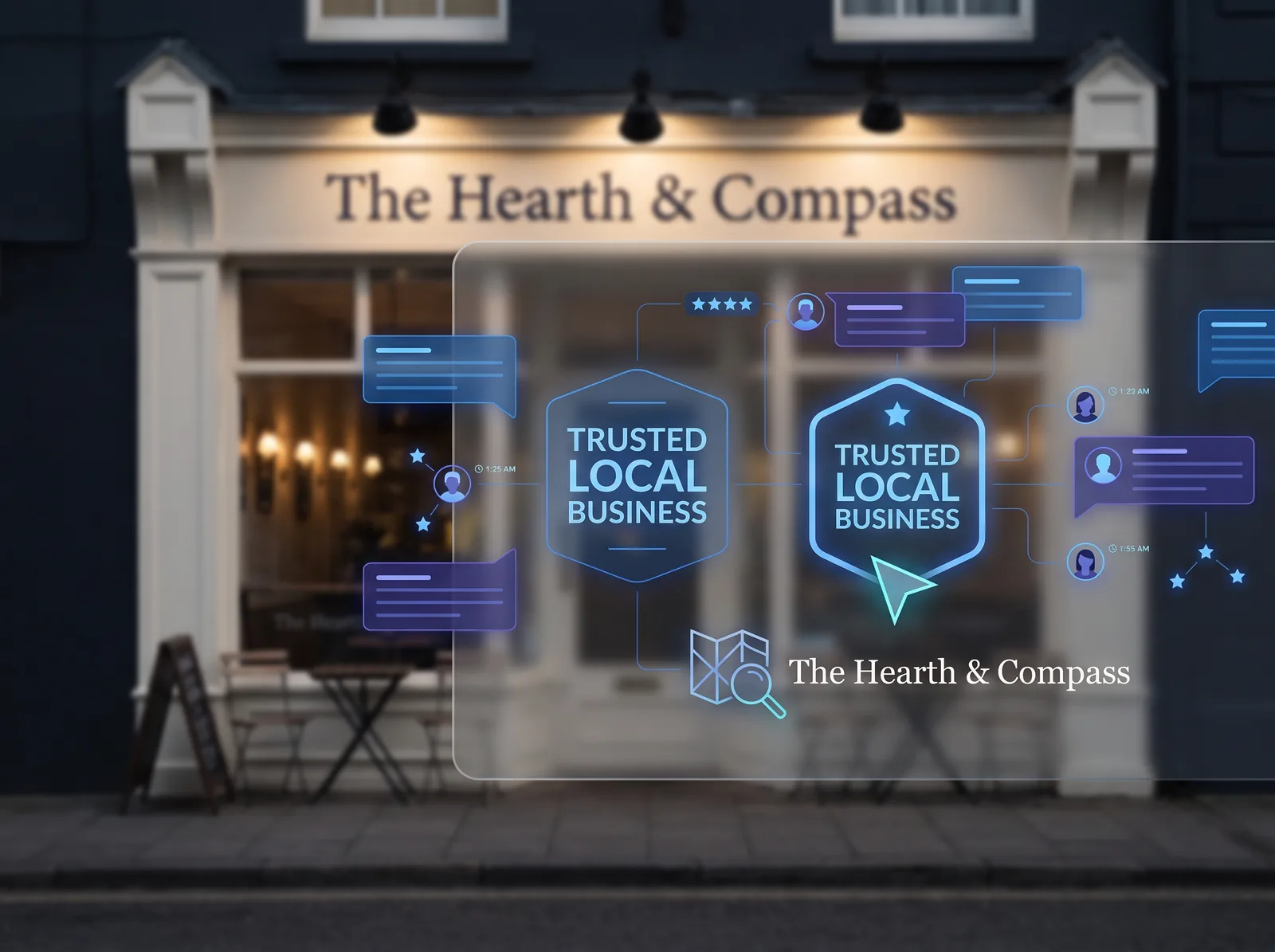
A response to a negative review is not written only for the person who complained.
It is also written for the next people who will read it.
A professional, specific, and calm reply can turn a negative review into evidence that the business operates seriously.
Photos Are Not Just Decoration
Google recommends adding photos and videos so customers can better understand what a business offers.
This is especially important for hospitality companies and local brands.
A user who sees:
- real room photos,
- the exterior of the accommodation,
- access information,
- dishes,
- views,
- the dining area,
- products,
- atmosphere,
may make a decision without even opening the website.
Images therefore directly affect the quality of the presence, even when they are not a simple “ranking hack.”
Your Website Affects Local SEO More Than You Think
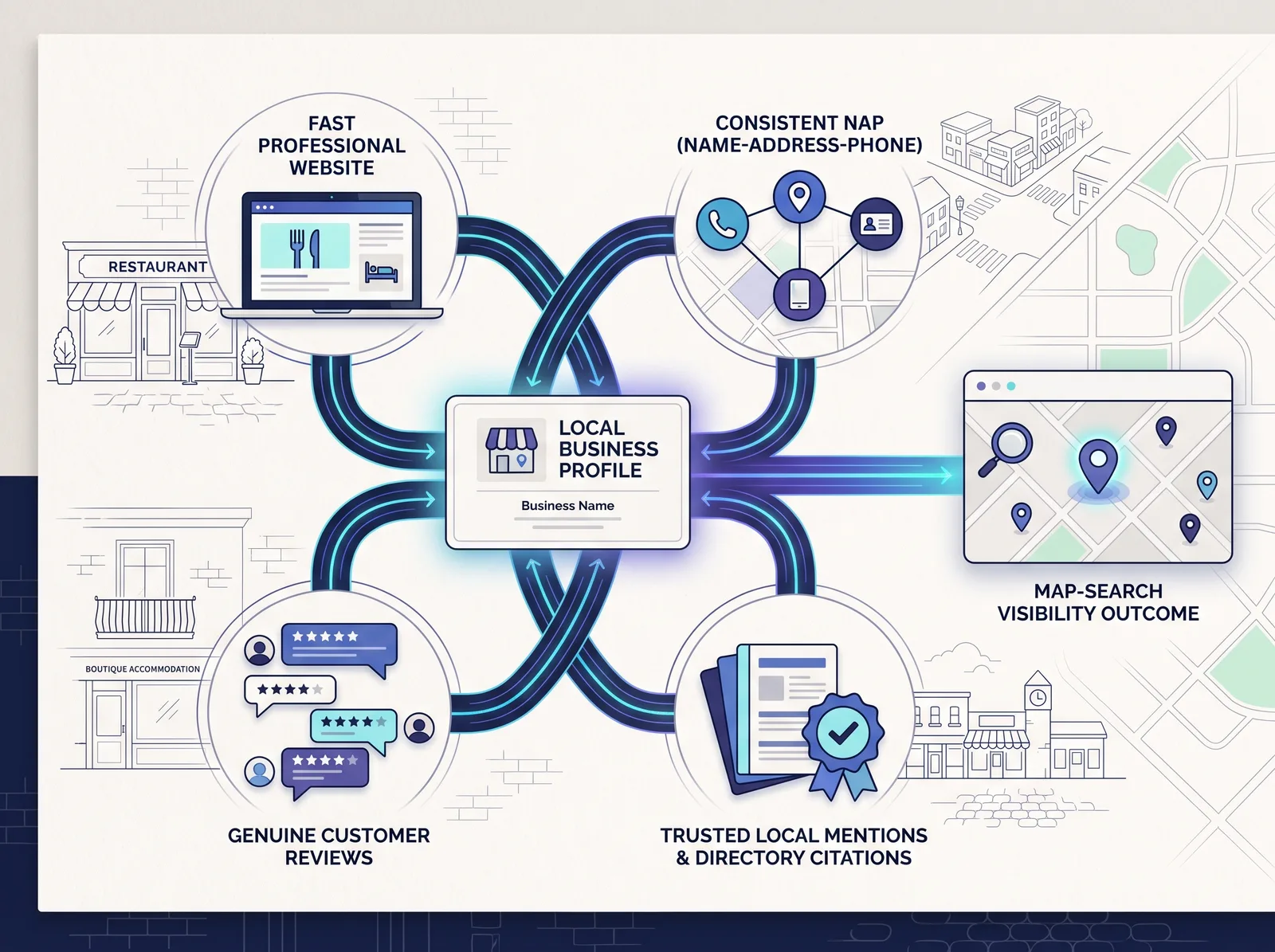
One of the most common mistakes is treating the Google Business Profile as an independent channel.
It is not.
Google states that it may source information for Business Profiles from publicly available web content, including the official website.
The website's organic position is also part of the signals associated with prominence.
Your website should clearly confirm:
- what the business is,
- what it offers,
- where it is located,
- which areas it serves,
- how someone can make contact,
- which services or products are genuinely available.
If the Google Business Profile says one thing and the website says another, that creates ambiguity.
The Essential Details Must Agree
Check that the following are consistent:
- Business Name
- Address
- Phone
- Website URL
- Opening hours wherever they appear
- Brand naming
- Service and location descriptions
You do not need to obsessively chase every old directory on the internet.
The important thing is that the main, trustworthy sources do not present conflicting information.
You Need Pages That Explain Service + Location
If you operate in a specific area, the website must make that clear.
A generic page that says:
“We provide high-quality services with professionalism.”
does not particularly help either the customer or the search engine.
A meaningful local service page can explain:
- which service you offer,
- in which area,
- who it is for,
- which problems it solves,
- what it includes,
- how the collaboration works,
- which local characteristics you understand,
- which projects or examples you have in the area.
That does not mean creating 50 nearly identical pages and changing only the city name.
In its newer official guidance for AI Search, Google emphasizes that unique, useful content grounded in real experience has greater long-term value than content that merely repeats what is already available.
Local SEO and AI Search: Does Anything Change in 2026?
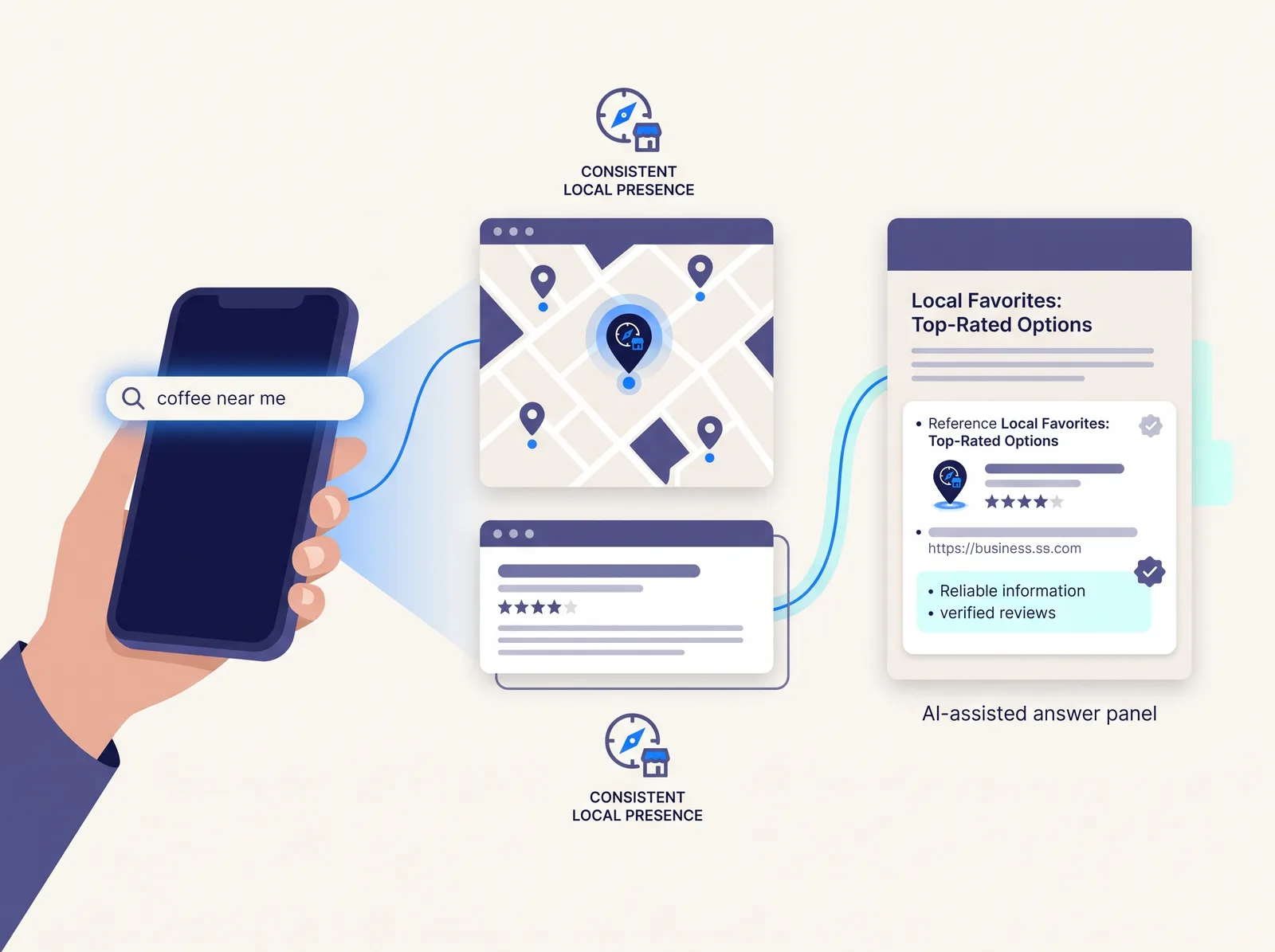
Yes and no.
In 2026, Google has expanded its generative AI experiences, including AI Overviews and AI Mode, and has published more specific guidance on how businesses should approach this new reality.
Its central position is clear:
SEO practices continue to apply to generative AI experiences.
Google says that a website does not need a separate “magic” AEO or GEO setup to appear in its AI features.
It needs:
- crawlable content,
- indexable content,
- useful content,
- a clear technical structure,
- real information and experience,
- non-generic value,
- correct organization.
For a local business, this means the best AEO strategy is not to write “for AI.”
It is to create clear answers to questions such as:
- Where exactly is the business located?
- What services does it offer?
- Which areas does it serve?
- How much does it cost?
- When is it open?
- What should someone know before visiting?
- How is it different from other options?
- Are parking, accessibility, or booking requirements involved?
- How does someone make a reservation?
That is useful for people, Google Search, and AI-generated search experiences.
Structured Data: Useful, but Not Magic
LocalBusiness structured data can help Google better understand information such as:
- business name,
- address,
- telephone,
- opening hours,
- geographic coordinates,
- business type,
- menu,
- URL.
Google recommends using the most specific subtype of LocalBusiness available, such as Restaurant, wherever possible.
This needs one important clarification:
Schema does not guarantee a better position on Google Maps.
Structured data supports understanding and eligibility for particular search features. It is not a mechanism for buying rankings.
Google also states that correct structured data does not guarantee that a rich result will appear.
What to Do in Practice: Local SEO Checklist
1. Verify the Business Profile
Make sure the business is verified and that you have genuine control of the profile.
2. Check the Essential Information
- name,
- address,
- phone number,
- website,
- opening hours,
- special hours,
- service area.
3. Choose the Correct Primary Category
The primary category should describe the main business activity as specifically as possible.
4. Complete Services and Attributes
Do not leave essential information blank.
5. Refresh the Photos
Use genuine, high-quality material that helps the user understand the place, experience, or service.
6. Create a Consistent Review Process
Ask genuine customers for reviews in a natural and lawful way.
7. Respond to Reviews
Do not use a copy-and-paste “thank you very much.” Respond like a real business.
8. Improve the Website
Check:
- mobile usability,
- speed,
- clear navigation,
- service pages,
- location information,
- contact information,
- metadata,
- indexing,
- Search Console.
9. Create Useful Local Content
For a tourism business:
- destination guides,
- how-to-get-there pages,
- seasonal guides,
- neighborhood content,
- practical FAQs.
For a service business:
- service + area pages with genuine local knowledge,
- case studies,
- frequently asked questions,
- cost guides,
- comparison articles.
10. Check Structured Data
Use the correct LocalBusiness type, or a more specific subtype where relevant.
11. Build Genuine Local Recognition
Partnerships, local media, relevant directories, tourism guides, chambers, associations, and genuine mentions can strengthen the business's presence on the web.
Not spam directories.
What Not to Do
Do Not Change the Business Name for Keywords
The Business Profile must use the real business name.
Do Not Buy Reviews
The risk is greater than any temporary benefit.
Do Not Create Fake Locations
A fake office or virtual address is not a legitimate local SEO strategy.
Do Not Create Dozens of Nearly Identical Local Pages
“Web Design Athens,” “Web Design Piraeus,” and “Web Design Glyfada” with the same copy and only the city name changed is not a serious strategy.
Do Not Chase Rankings Alone
If you appear high in the results but:
- the photos are poor,
- reviews go unanswered,
- the website is slow,
- the user cannot understand what you offer,
- there is no easy contact or booking path,
then visibility does not turn into customers.
Local SEO must connect with conversion.
How Do You Measure Whether Local SEO Is Working?
Do not look only at “what position am I in?”
Track:
- impressions from local queries,
- clicks to the website,
- calls,
- direction requests,
- booking clicks,
- form submissions,
- branded searches,
- non-branded local searches,
- views of location and service pages,
- conversions from organic traffic,
- the number and quality of reviews,
- Search Console queries by area and service.
Position can change by user and location.
Business results are a more stable measure.
Do I Need Local SEO If I Already Have Instagram?
Yes, if your customers use Google Search or Maps to make decisions.
Instagram and Google serve different moments in that decision.
Someone may:
- see a Reel,
- remember the name,
- search for the business on Google,
- read reviews,
- view the location,
- open the website,
- call or make a reservation.
If your social media presence is strong but your Google presence is weak, you lose part of the value the content is already creating.
Digital presence works as a system.
That is why Local SEO, the website, and the broader digital strategy should not be designed as isolated services.
How Quickly Can a Google Maps Presence Improve?
There is no single timeline that applies to everyone.
It depends on:
- competition,
- location,
- category,
- existing reputation,
- website quality,
- reviews,
- the age and history of the business,
- mentions and links,
- information quality,
- technical problems,
- the user's actual distance from the business.
Some corrections can quickly improve the accuracy of the presence.
Building prominence and organic authority is a longer-term process.
Conclusion: Google Maps Is Not Separate From the Rest of the Business
The biggest mistake is treating the Google Business Profile like a settings panel that is “optimized” once.
It does not work that way.
Google tries to understand the real business through multiple sources:
- the Business Profile itself,
- the website,
- reviews,
- links,
- mentions,
- directories,
- information from users,
- information it gathers from the web.
The right strategy is therefore not:
“Which keyword should I put in the Google Business Profile?”
The right question is:
“Does Google have enough clear, consistent, and trustworthy information to understand that my business is a good answer to this local search?”
That is Local SEO.
And in 2026, as Google increasingly integrates AI-generated search experiences, the need for clear, genuine, and useful information becomes greater, not smaller.
If your business is not appearing where it should, do not start with “hacks.”
Start with the foundations:
the right identity, the right information, the right website, genuine reviews, local relevance, and a consistent presence.
FAQ
How Can I Get My Business to Appear on Google Maps?
Create or claim the business's Google Business Profile, complete the verification process, and accurately add the name, category, location, phone number, website, and opening hours. Visibility and position depend on relevance, distance, and prominence.
Why Does My Competitor Appear Higher on Google Maps?
The competitor may be more relevant to that particular search, may be closer to the user, or may have stronger prominence through reviews, links, website authority, and a broader web presence. There is no single factor.
Do Google Reviews Help Local Rankings?
Yes. Google says that the number of reviews and positive ratings can help local ranking. Reviews must come from genuine experiences and should never be bought or incentivized.
Should I Put Keywords in the Google Business Profile Name?
Only if they are genuinely part of the official business name. Google requires the name to reflect the real business name as it appears on signage, the website, and branding.
How Many Categories Should I Add to the Google Business Profile?
Use the fewest and most specific categories needed to describe the core of the business accurately. The primary category is particularly important.
Does My Website Help Me Rank Better on Google Maps?
Yes. Google uses publicly available information from the web, including the official website, and says that position in web results forms part of prominence.
Do I Need LocalBusiness Schema?
It is useful because it helps Google understand structured business information such as name, address, phone number, and opening hours. It does not guarantee rankings or a rich result.
Does Local SEO Also Help With AI Search?
Yes, in the sense that fundamental SEO practices still apply to AI Overviews and AI Mode. Google says that a separate AEO or GEO hack is not required. The content needs to be crawlable, indexable, useful, and trustworthy.
Can I Pay Google for a Better Organic Position on Maps?
No. Google states that there is no way to request or pay for a better local ranking. Google Ads is a separate paid channel.
How Long Does Local SEO Take?
There is no fixed period. Simple profile corrections may quickly affect the accuracy of the presence, but building reviews, authority, links, content, and prominence requires consistent work over time.
Sources and Technical References
- Google Business Profile Help — Tips to improve your local ranking on Google
- Google Business Profile Help — Guidelines for representing your business on Google
- Google Business Profile Help — Understand how Google sources & uses info in Business Profiles
- Google Business Profile Help — Tips to get more reviews
- Google Search Central — Local Business structured data
- Google Search Central — Establish your business details with Google
- Google Search Central — Optimizing your website for generative AI features on Google Search
- Google Search Central — AI features and your website