Article Overview
| Topic | What You'll Learn |
|---|---|
| Is SEO Dead? | Why SEO is still relevant in 2026 |
| Google's Evolution | How search has changed over time |
| AI and SEO | Whether ChatGPT and AI are replacing search |
| Modern Ranking Factors | What Google values today |
| SEO vs Paid Ads | Which strategy delivers better long-term results |
| Local SEO | Why local businesses still benefit enormously |
| Practical Tips | How to improve visibility without technical complexity |
Introduction: The Question Every Business Owner Is Asking
If you've spent any time online lately, you've probably seen headlines claiming that SEO is dead.
With AI tools becoming more powerful, search results changing, and Google's algorithms evolving constantly, many business owners are asking a simple question:
"Does SEO still work in 2026?"
The short answer is yes—but it doesn't work the same way it did five or ten years ago.
In fact, businesses that understand modern SEO are often gaining more visibility than ever before. The key difference is that Google's focus has shifted from technical tricks and keyword stuffing to providing genuinely useful information that helps real people.
SEO isn't disappearing. It's maturing.
What Exactly Is SEO?
SEO (Search Engine Optimization) is the process of helping your website appear when people search for products, services, or information online.
For example:
- A restaurant wants to appear when someone searches for "best restaurant near me."
- A hotel wants to rank for "boutique hotel in Athens."
- A web design agency wants visibility for "website design services Greece."
Good SEO helps potential customers discover your business naturally through search engines without paying for every click.
How Google Search Has Changed Over the Years
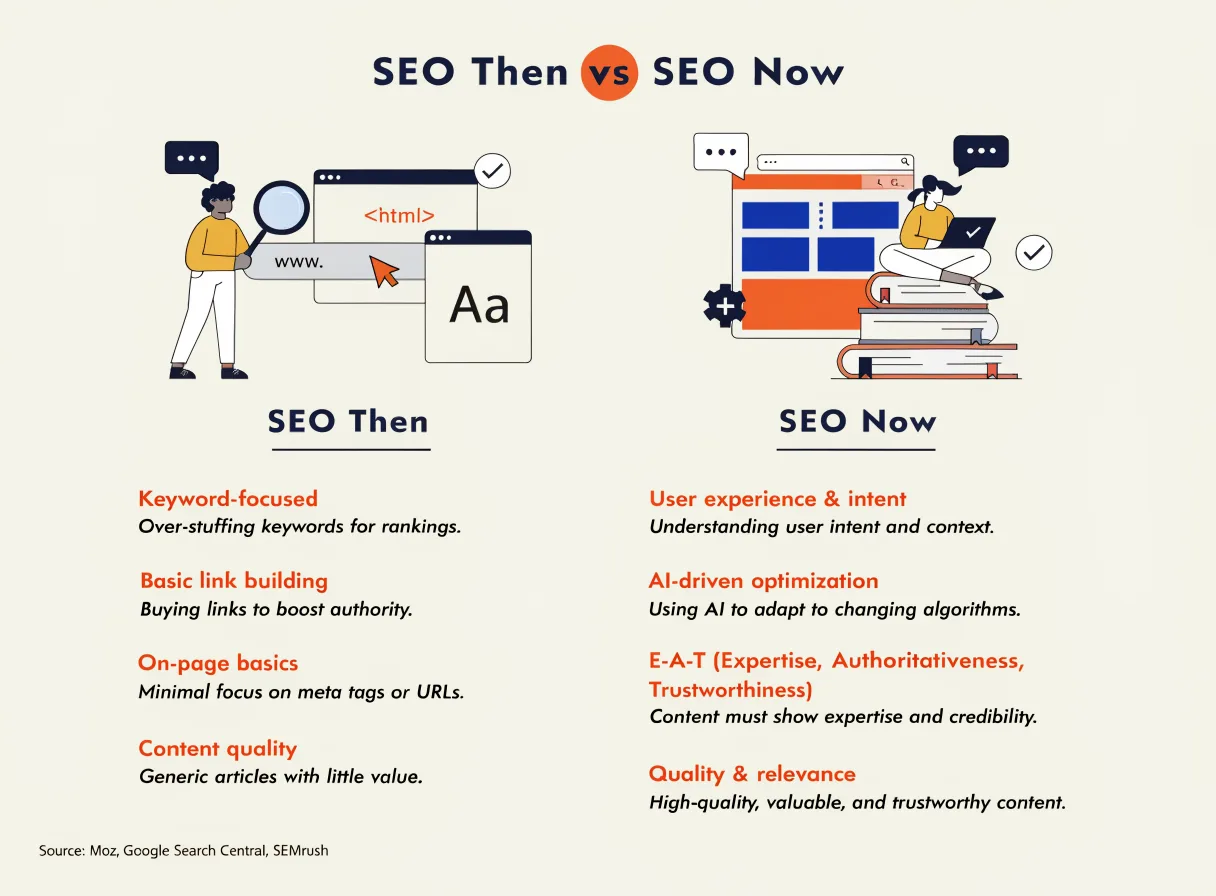
The Old Days of SEO
Years ago, ranking on Google was often about:
- Repeating keywords
- Building large numbers of backlinks
- Creating content purely for search engines
- Publishing massive amounts of low-quality pages
Many websites ranked despite providing poor user experiences.
The Modern Approach
Today, Google focuses heavily on:
- Content quality
- User experience
- Website credibility
- Expertise
- Relevance
- Mobile usability
Google's goal is simple:
Deliver the best possible answer to the user's question.
If your website helps users solve problems, your chances of ranking improve significantly.
Why SEO Still Matters More Than Ever
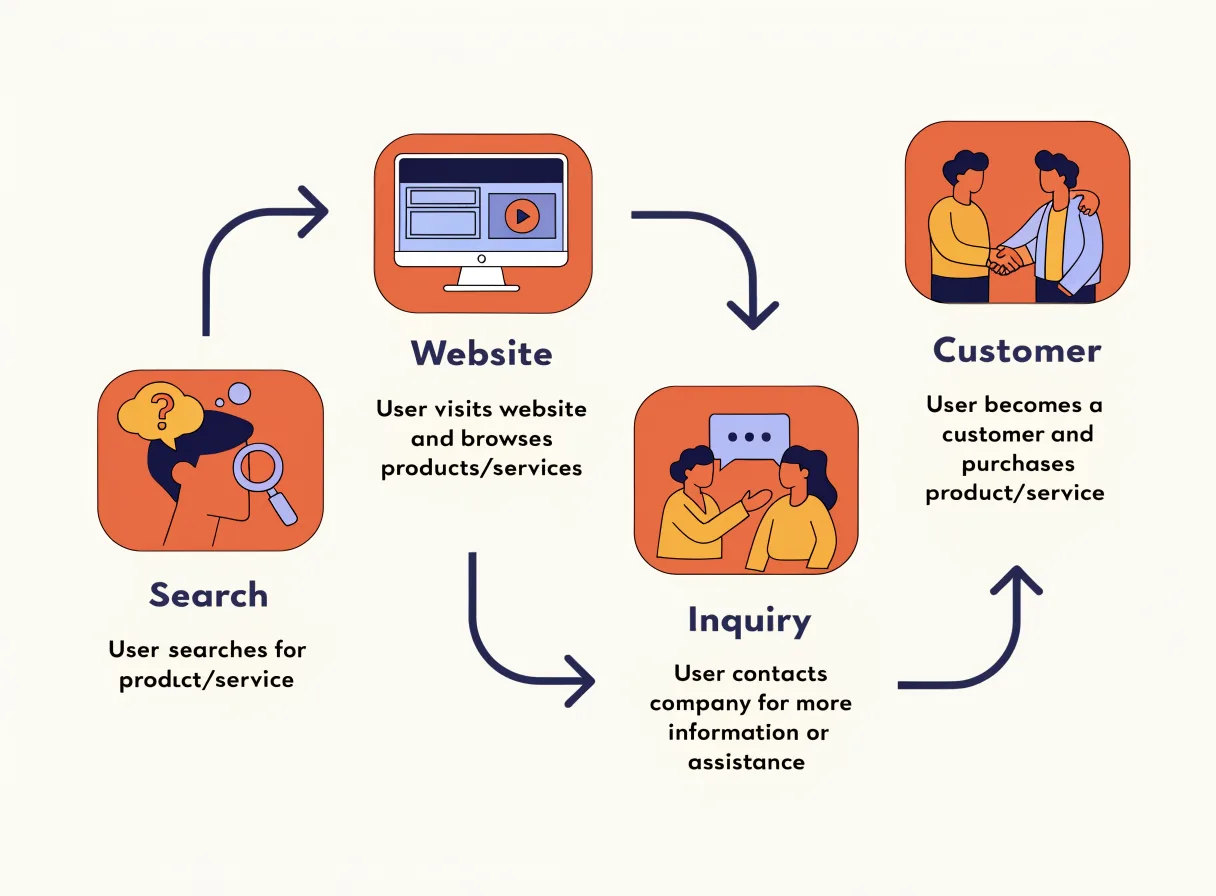
Many business owners assume AI tools will eliminate the need for SEO.
The reality is quite different.
People still search every day for:
- Services
- Products
- Reviews
- Local businesses
- Solutions to problems
Search behavior hasn't disappeared.
It has evolved.
When someone needs a plumber, accountant, hotel, lawyer, dentist, or web designer, they usually start with a search.
Businesses that appear during that search have a major advantage.
The Relationship Between AI and SEO
Will ChatGPT Replace Google?
Not entirely.
AI tools are changing how people find information, but search engines remain a critical part of the customer journey.
Many users now:
- Ask AI for recommendations.
- Visit websites for verification.
- Compare businesses.
- Read reviews.
- Make purchasing decisions.
This means your website still needs visibility and authority.
AI Is Changing SEO—Not Killing It
The businesses succeeding today are creating content that:
- Answers real questions
- Demonstrates expertise
- Builds trust
- Provides unique insights
AI can help create content, but businesses still need human expertise and credibility.
What Google Cares About in 2026
Helpful Content
Google rewards content that genuinely helps users.
Ask yourself:
- Does this answer a real question?
- Is it easy to understand?
- Would someone find value from reading it?
If the answer is yes, you're moving in the right direction.
User Experience
Visitors expect:
- Fast-loading pages
- Mobile-friendly design
- Easy navigation
- Clear information
A beautiful website with poor usability will struggle.
Trust and Authority
Google increasingly evaluates whether a business appears trustworthy.
Trust signals include:
- Customer reviews
- Business information
- Author expertise
- Projects
- Testimonials
The Rise of Local SEO
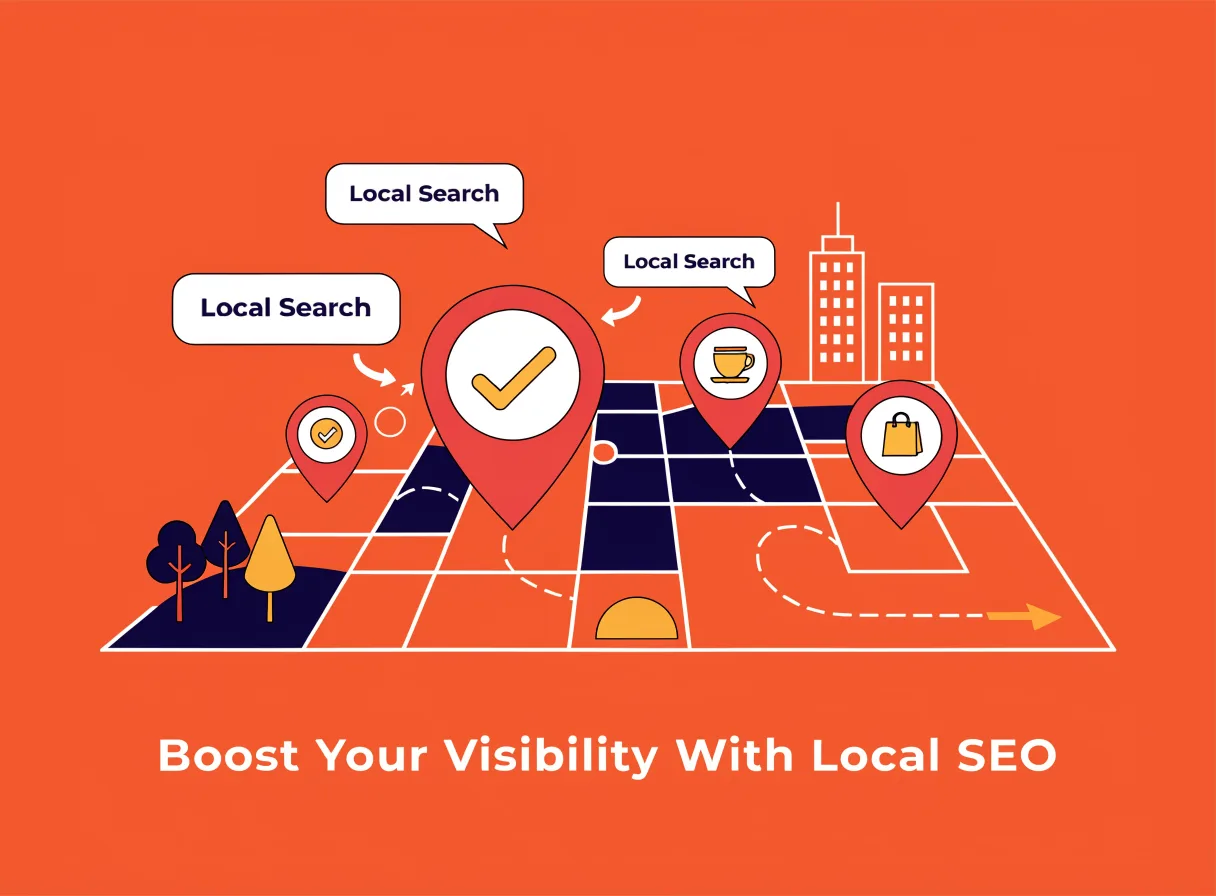
For local businesses, SEO remains incredibly powerful.
Consider how often people search for:
- "restaurant near me"
- "hotel in Athens"
- "web designer in Greece"
- "graphic design agency near me"
These searches often lead directly to purchases or inquiries.
Why Local SEO Works
Local search users are usually ready to take action.
They are not just researching.
They are looking to:
- Book
- Buy
- Call
- Visit
That makes local SEO one of the highest-return marketing investments available.
SEO vs Google Ads
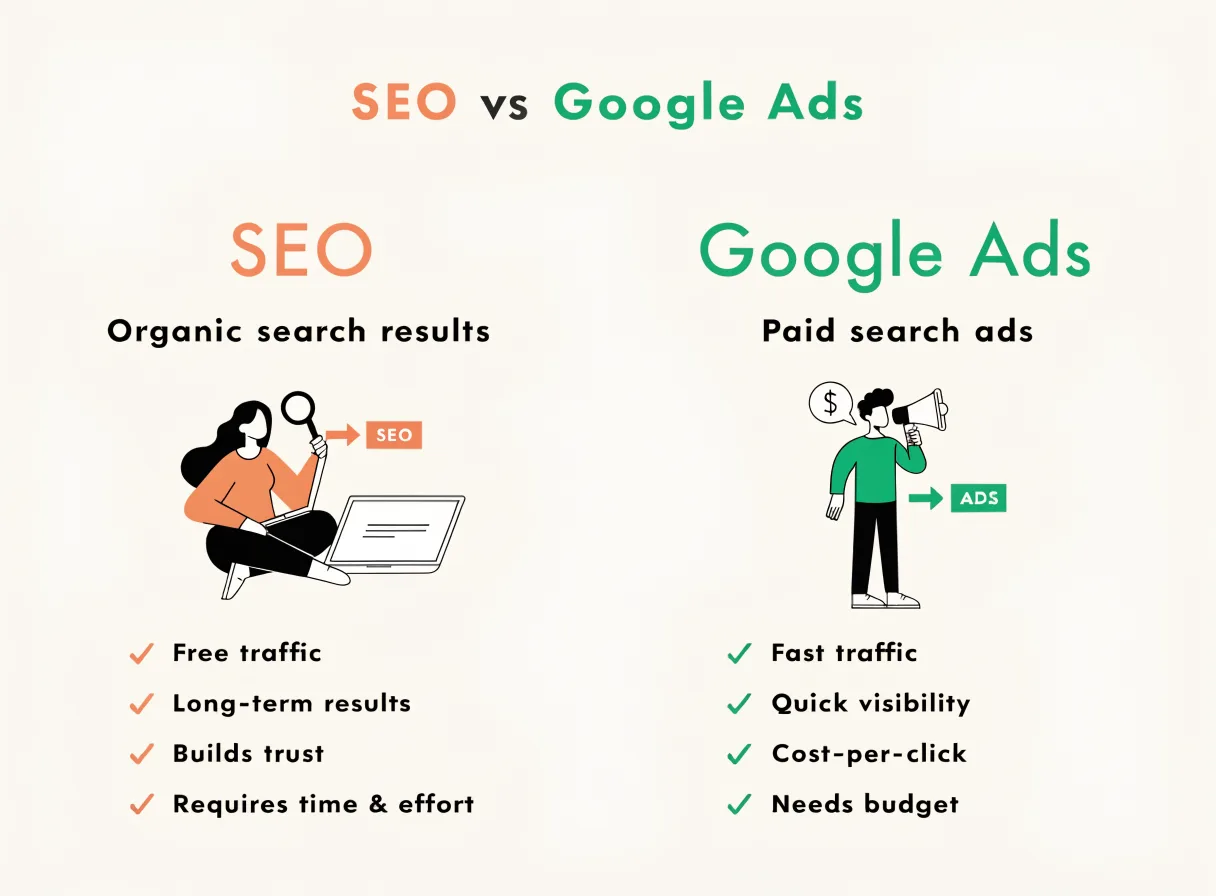
Many business owners compare SEO with paid advertising.
The truth is that both have value.
| SEO | Google Ads |
|---|---|
| Long-term growth | Immediate visibility |
| Builds authority | Instant traffic |
| Lower cost over time | Continuous spending |
| Sustainable results | Results stop when ads stop |
| Generates trust | Generates quick exposure |
The Best Strategy
Most successful businesses use:
- SEO for long-term growth
- Ads for immediate opportunities
Together, they create a balanced marketing strategy.
Common SEO Mistakes Businesses Still Make
Focusing Only on Rankings
Ranking first is not always the goal.
The real goal is:
- Leads
- Sales
- Bookings
- Revenue
Traffic without conversions is meaningless.
Publishing Low-Quality Content
More content does not automatically mean better results.
Ten helpful articles often outperform one hundred weak articles.
Ignoring Mobile Users
Most visitors now browse on smartphones.
A poor mobile experience can damage both rankings and conversions.
Neglecting Website Speed
Slow websites frustrate users and reduce engagement.
Even a few seconds of delay can impact performance.
How Small Businesses Can Compete with Larger Brands
Many small business owners feel intimidated by large corporations.
The good news is that local expertise often beats size.
A small business can outperform larger competitors by:
- Creating useful local content
- Answering customer questions
- Building strong reviews
- Demonstrating real expertise
- Maintaining an optimized website
Google wants the best answer—not necessarily the biggest company.
What Kind of Content Performs Best Today?
The most successful content usually:
Answers Questions
Examples:
- How much does a website cost?
- Is SEO worth it?
- How long does branding take?
Provides Practical Advice
Readers appreciate actionable guidance they can use immediately.
Shows Real Experience
Projects and real-world examples build trust.
Uses Clear Language
Avoid unnecessary jargon.
Simple explanations often perform better than overly technical content.
The Future of SEO
SEO will continue evolving.
However, one thing is unlikely to change:
People will always seek answers.
Whether they use Google, AI assistants, voice search, or future technologies, businesses that provide valuable information will continue attracting attention.
The tactics may change.
The principles remain the same:
- Help people.
- Build trust.
- Create useful content.
- Offer a great user experience.
Frequently Asked Questions
1. Is SEO still worth investing in during 2026?
Yes. SEO remains one of the most cost-effective long-term marketing channels available to businesses.
2. Can AI replace SEO completely?
No. AI is changing search behavior, but businesses still need visible, authoritative websites.
3. How long does SEO take to work?
Most businesses begin seeing meaningful improvements within several months, although timelines vary depending on competition and industry.
4. Is SEO better than Google Ads?
Neither is universally better. SEO offers long-term growth, while Google Ads provide immediate visibility.
5. Does local SEO still matter?
Absolutely. Local searches often lead directly to calls, visits, bookings, and sales.
6. Do I need to publish content regularly?
Consistent, high-quality content generally performs better than infrequent or low-value publishing.
7. Can small businesses compete with larger brands?
Yes. Many small businesses rank successfully by focusing on local expertise and customer-focused content.
8. What is the biggest SEO mistake today?
Creating content solely for search engines rather than for real people.
Conclusion
So, does SEO still work in 2026?
The answer is a clear yes.
What has changed is the way success is achieved.
Modern SEO is no longer about gaming algorithms or chasing shortcuts. It is about creating helpful content, building trust, improving user experience, and becoming the best answer to a customer's question.
Businesses that embrace these principles will continue benefiting from organic visibility, qualified traffic, and long-term growth.
In a world increasingly influenced by AI, trustworthy websites and valuable content are not becoming less important—they are becoming more important than ever.