Introduction

One of the first questions every business owner asks after investing in SEO is:
"How long will it take before my website reaches the first page of Google?"
Or even more specifically:
"How long does it take to rank #1?"
It's a fair question.
After all, SEO requires time, effort, and budget. Most businesses want to know when they can expect results.
The honest answer is:
It depends.
Some websites see improvements within a few months, while others may need a year or more to achieve highly competitive rankings.
The good news is that SEO follows predictable patterns. Understanding the timeline can help set realistic expectations and prevent frustration.
Let's look at what really affects SEO success in 2026.
The Biggest SEO Myth: Ranking #1 Happens Quickly
Many businesses fall for promises such as:
- "Rank #1 in 30 days"
- "Guaranteed first-page rankings"
- "Instant SEO results"
In reality, no agency can guarantee a #1 ranking because Google controls the search results.
Search rankings depend on hundreds of factors, including:
- Competition
- Website authority
- Content quality
- Technical SEO
- Backlinks
- User experience
SEO is not an overnight process.
It's a long-term strategy.
Why There Is No Exact SEO Timeline
Every website starts from a different position.
A new website and a 10-year-old website do not face the same challenges.
Several factors influence how quickly rankings improve.
Website Age
Older websites often have an advantage because Google already knows and trusts them.
Competition
Ranking for:
"Plumber in Athens"
is usually much easier than ranking for:
"Digital Marketing Agency"
Industry
Some industries are extremely competitive.
Examples:
- Insurance
- Finance
- Real Estate
- Marketing
- Legal Services
Others have fewer competitors and can rank faster.
Existing SEO Foundation
A website with strong technical SEO will generally improve more quickly than one with major technical problems.
A Realistic SEO Timeline
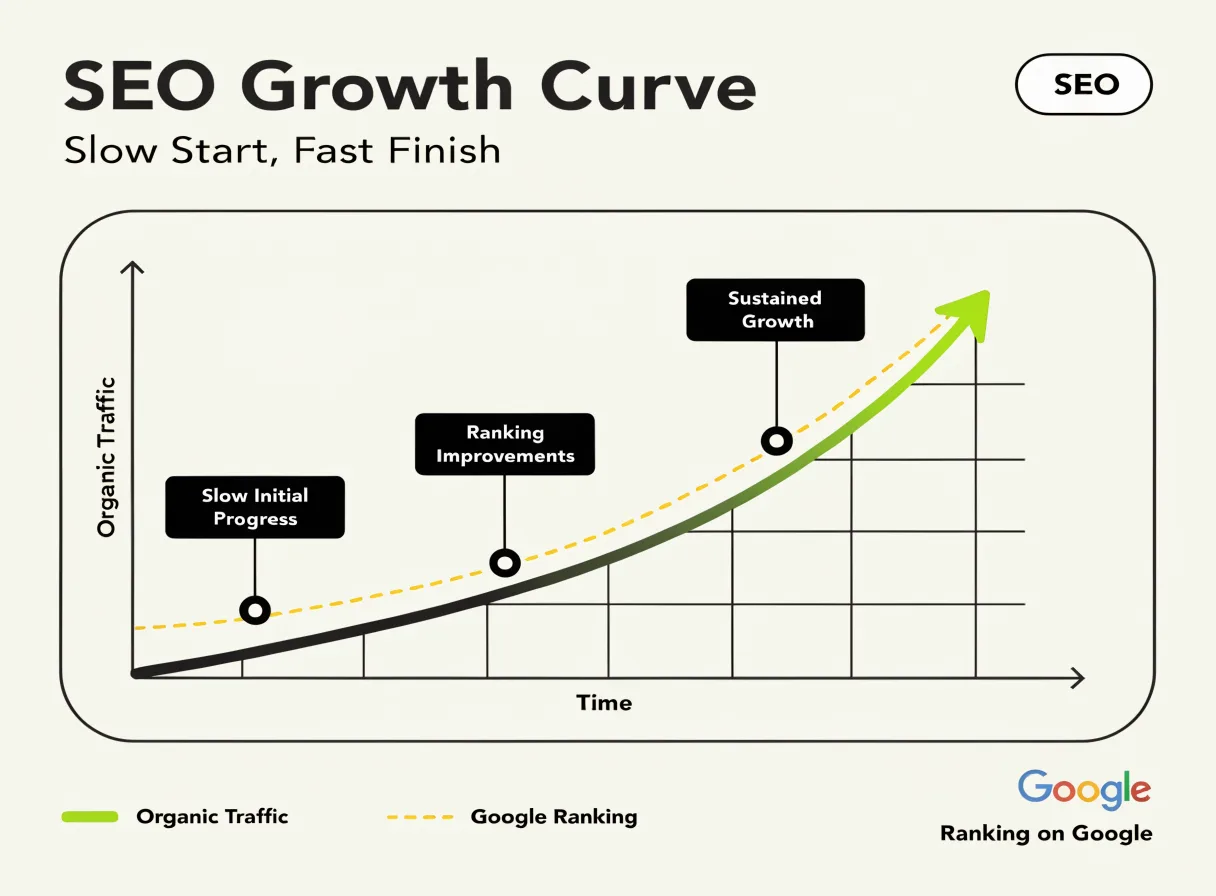
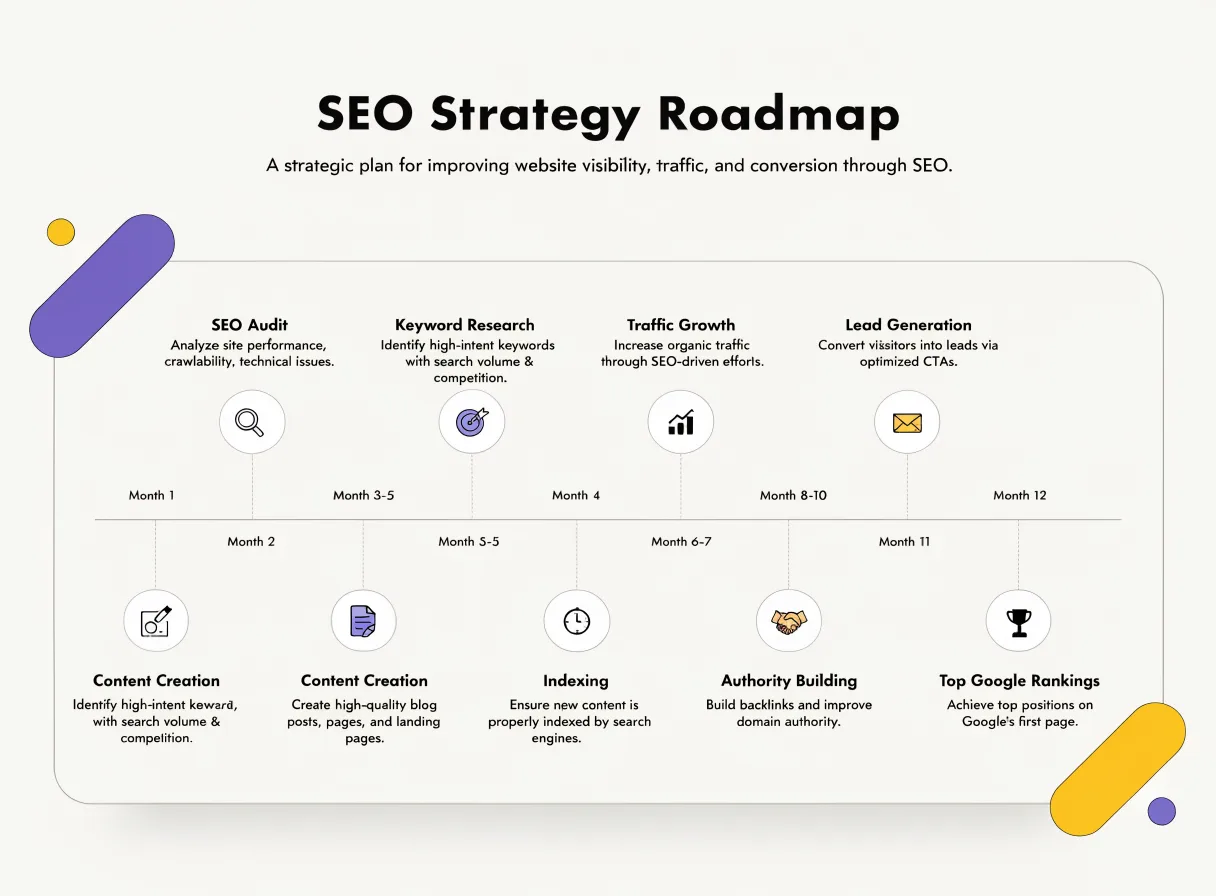
Month 1: Research and Technical Improvements
During the first month, most SEO work happens behind the scenes.
Activities include:
- SEO audit
- Keyword research
- Competitor analysis
- Technical fixes
- Google Search Console setup
- Website optimization
At this stage, visible ranking improvements may be minimal.
Months 2–3: Content and Indexing
The focus shifts toward:
- Publishing content
- Optimizing service pages
- Improving internal linking
- Building topical authority
Google begins crawling and indexing the improvements.
You may start seeing:
- New keyword rankings
- Increased impressions
- Small traffic increases
Months 4–6: Early Growth
This is when many businesses begin noticing measurable progress.
Potential improvements include:
- Higher rankings
- Increased organic traffic
- More local visibility
- More website inquiries
For local businesses, this period often produces the first meaningful results.
Months 6–12: Significant SEO Momentum
Websites that consistently publish quality content often experience stronger growth.
Benefits may include:
- First-page rankings
- More qualified traffic
- Increased leads
- Greater brand visibility
At this stage, Google begins recognizing your website as a more authoritative source.
12+ Months: Authority and Competitive Rankings
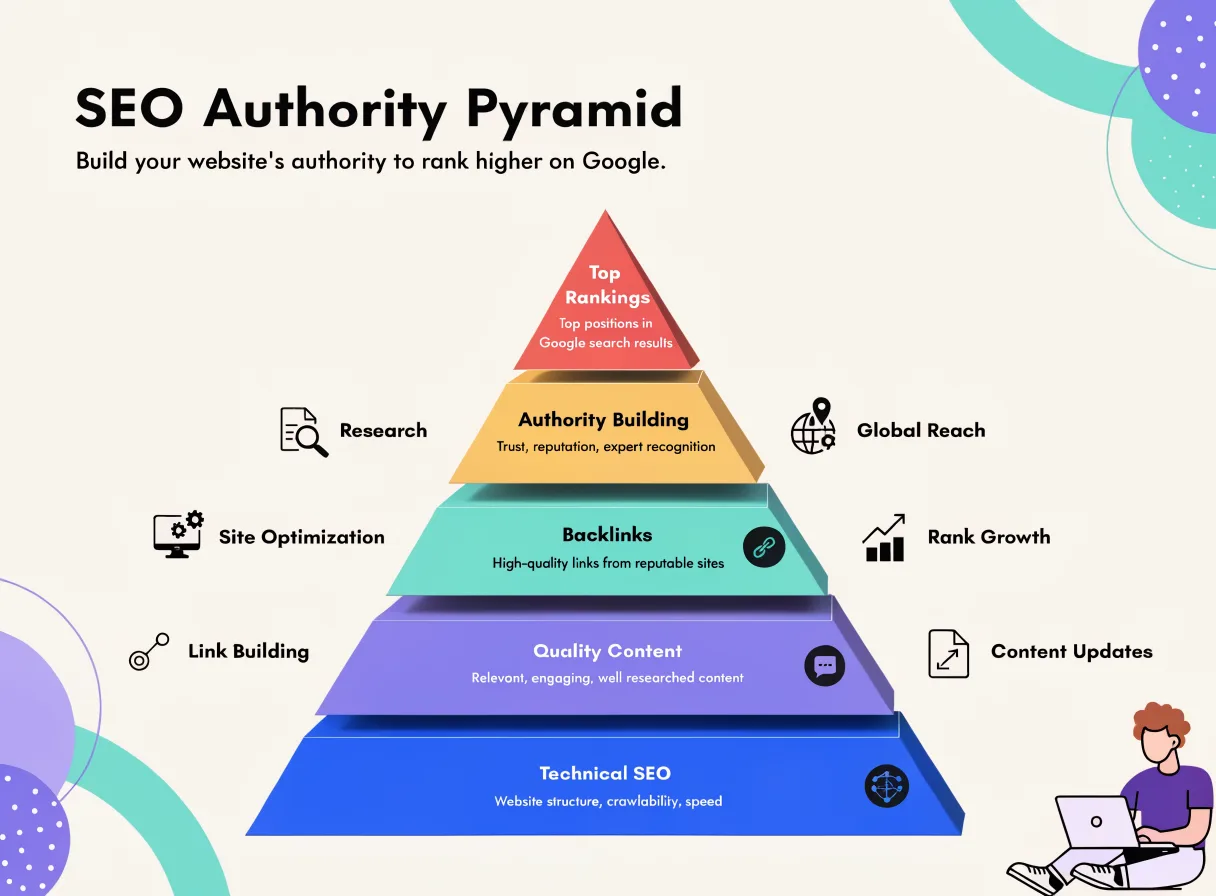
The strongest SEO results often appear after a year or more.
This is especially true in competitive industries.
Businesses that remain consistent can achieve:
- Top rankings
- Lower customer acquisition costs
- Strong brand authority
- Sustainable lead generation
This is where SEO becomes a major business asset.
What Affects How Fast You Rank?
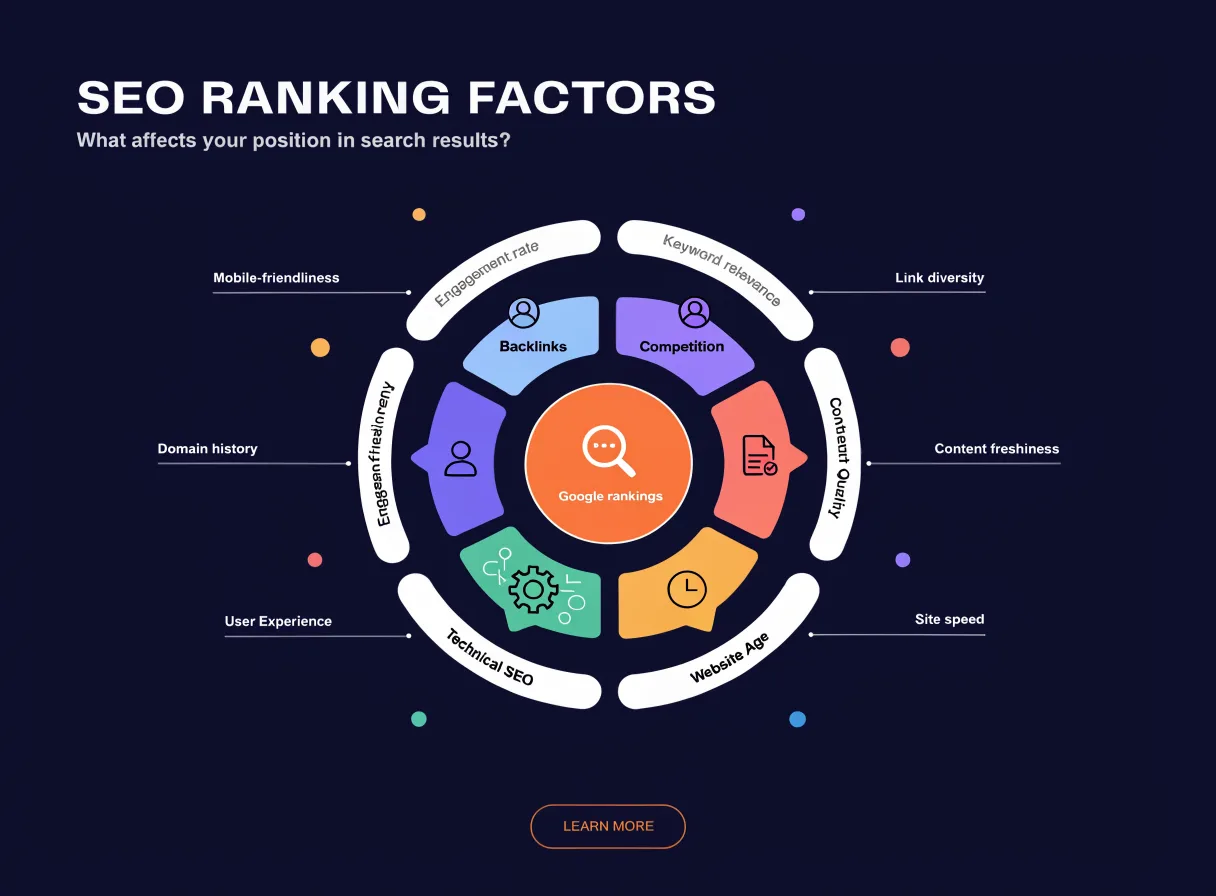
1. Competition Level
Low-competition keywords can rank quickly.
Highly competitive keywords may take much longer.
For example:
| Keyword | Difficulty |
|---|---|
| Dentist in Kalamata | Low |
| Dentist Greece | Medium |
| Best Dentist | High |
The broader the keyword, the harder it becomes.
2. Website Authority
Google trusts websites that have:
- Strong content
- Quality backlinks
- Consistent activity
New websites typically start with little authority.
Authority grows over time.
3. Content Quality
Google rewards content that:
- Answers questions
- Solves problems
- Demonstrates expertise
- Provides value
Thin content rarely performs well.
Comprehensive content often performs much better.
4. Backlinks
Backlinks remain an important ranking factor.
When reputable websites link to your content, Google sees this as a vote of confidence.
Quality matters far more than quantity.
5. Technical SEO
Even excellent content can struggle if technical issues exist.
Common problems include:
- Slow speed
- Broken links
- Indexing issues
- Mobile usability problems
Technical optimization creates a stronger foundation for rankings.
Local SEO vs National SEO Timeline
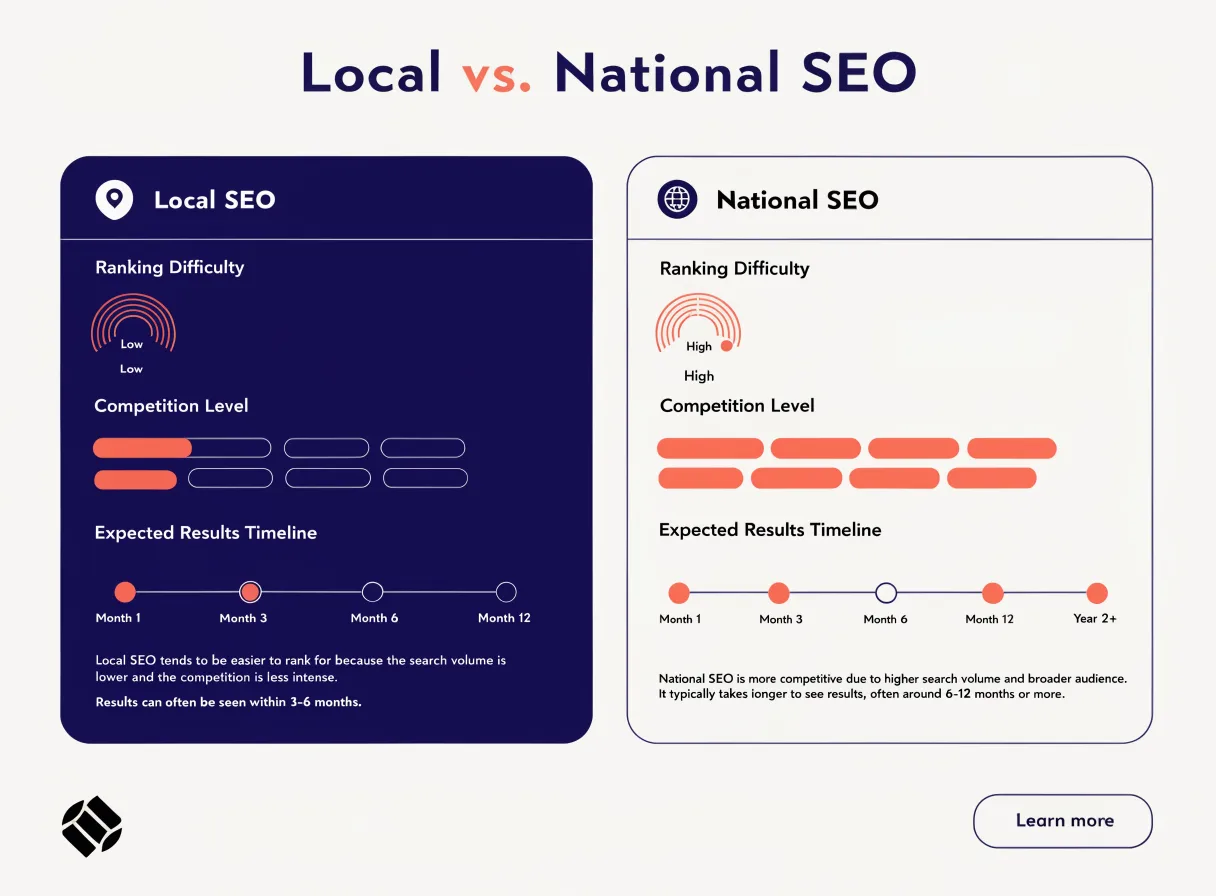
Not all SEO campaigns take the same amount of time.
Local SEO
Examples:
- Dentist in Athens
- Hotel in Crete
- Accountant in Thessaloniki
Potential timeline:
3–6 months
National SEO
Examples:
- Web Design Services
- Digital Marketing
- SEO Agency
Potential timeline:
6–18 months or longer
The larger the target market, the more competition you typically face.
Why Some Businesses Rank Faster Than Others
Consider these two examples:
Business A
Local plumber
- Small website
- Local keywords
- Limited competition
Potential ranking timeline:
3–6 months
Business B
National marketing agency
- Highly competitive industry
- Hundreds of competitors
- Strong existing websites
Potential ranking timeline:
12–24 months
The goal isn't simply speed.
The goal is sustainable growth.
SEO vs Google Ads: A Timeline Comparison
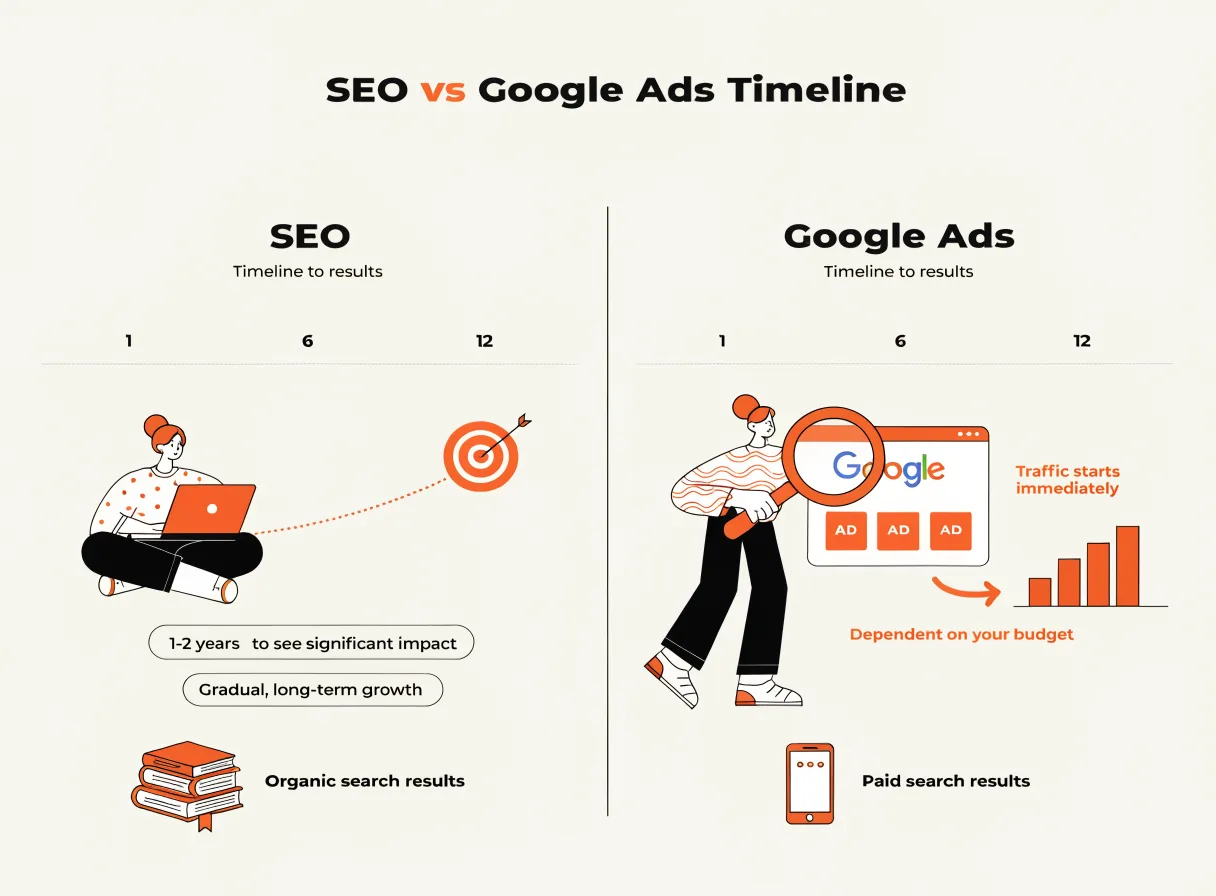
| SEO | Google Ads |
|---|---|
| Slower start | Immediate traffic |
| Long-term growth | Short-term visibility |
| Builds authority | Builds awareness |
| Sustainable results | Results stop when ads stop |
| Lower long-term cost | Ongoing ad spend |
This is why many successful businesses combine both strategies.
Google Ads provides immediate visibility while SEO builds long-term growth.
What Results Should You Actually Measure?
Many businesses focus only on rankings.
That's a mistake.
More important metrics include:
Organic Traffic
Are more visitors arriving?
Leads
Are inquiries increasing?
Conversions
Are visitors becoming customers?
Revenue
Is SEO contributing to business growth?
Rankings matter.
Business results matter more.
Red Flags to Watch Out For
Be cautious of anyone promising:
❌ Guaranteed #1 rankings
❌ First-page rankings in days
❌ Thousands of backlinks immediately
❌ Secret SEO methods
Successful SEO is based on consistency, quality, and patience.
How to Speed Up SEO Results
While you can't force rankings, you can improve your chances.
Focus on:
Publishing High-Quality Content
Answer real customer questions.
Improving Website Speed
Fast websites create better experiences.
Optimizing Local SEO
Especially important for local businesses.
Building Authority
Earn quality backlinks and mentions.
Maintaining Consistency
SEO rewards long-term effort.
Frequently Asked Questions
1. Can I rank on Google in 30 days?
For low-competition keywords, possibly. For competitive terms, it's unlikely.
2. How long does local SEO take?
Most local businesses begin seeing meaningful improvements within 3–6 months.
3. Does blogging help SEO?
Yes. Publishing useful content helps build authority and visibility.
4. Are backlinks still important?
Yes. High-quality backlinks remain one of Google's strongest ranking signals.
5. Can AI-generated content rank?
It can, but only if it provides genuine value and meets quality standards.
6. Why do competitors rank higher than me?
They may have stronger authority, better content, or more backlinks.
7. Is SEO faster for new websites?
Usually not. New websites often need time to establish trust.
8. What is the most important SEO factor?
There is no single factor. Successful SEO combines content, authority, technical performance, and user experience.
Conclusion
The question isn't simply:
"How long does it take to rank #1 on Google?"
A better question is:
"How long does it take to become the best answer for my customers?"
In most cases:
- Early improvements appear within 3–6 months.
- Strong growth often occurs between 6–12 months.
- Competitive rankings may take a year or more.
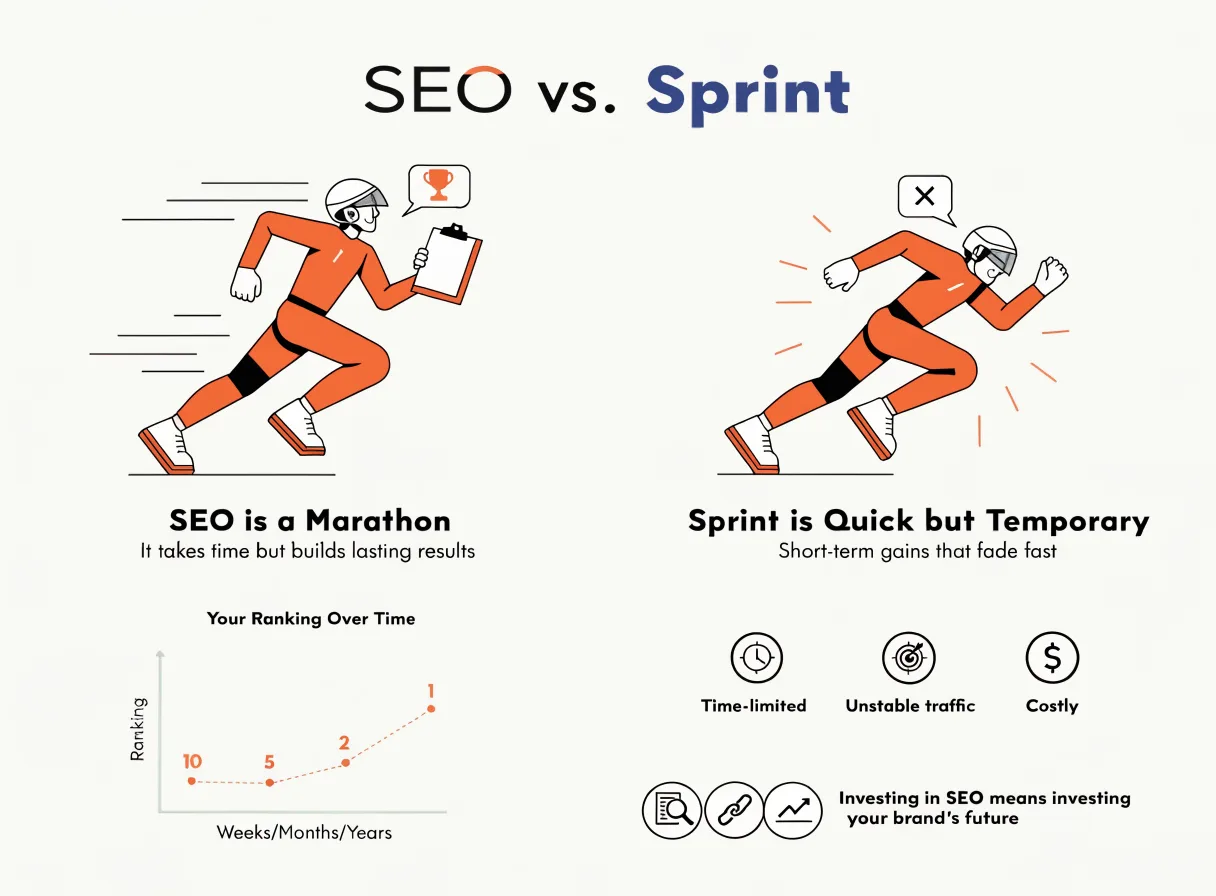
SEO is not a sprint.
It's a long-term investment that compounds over time.
Businesses that remain consistent often achieve something more valuable than rankings:
Trust, visibility, and sustainable growth.